

Glaucoma is a serious, progressive eye condition that damages the optic nerve and stands as a leading cause of irreversible blindness worldwide.
Because it often develops without any pain or early warning signs, it is widely known in the medical community as the “sneak thief of sight.”
Here is a short, informative web article tailored for your website audience.
Glaucoma is not just a single disease, but a group of eye conditions that cause progressive damage to the optic nerve. This nerve is responsible for transmitting visual information from your retina to your brain.
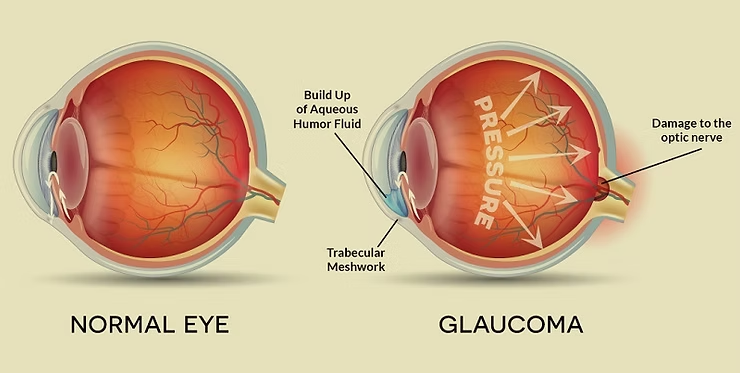
In most cases, this damage occurs when fluid builds up in the front part of the eye, increasing internal eye pressure (intraocular pressure) to dangerous levels. If left untreated, it leads to permanent vision loss.
Figures: Diagrams illustrating fluid build-up, intraocular pressure, and resultant optic nerve damage.
For the most common variant, there are no early symptoms. Vision loss starts so subtly from the periphery (side vision) that people rarely notice until significant damage has already occurred.
Figures: Visualizations of progressive peripheral vision loss and acute symptoms.
However, for acute angle-closure glaucoma, symptoms happen suddenly and require immediate emergency care:
While anyone can develop glaucoma, certain factors significantly increase your risk profile:
Vision loss caused by glaucoma is completely permanent and irreversible. However, regular eye check-ups can catch the disease early, allowing treatments to slow or halt further damage.
Treatments usually center around lowering intraocular pressure and include prescription eye drops, oral medications, laser therapy, or surgical intervention.



One Response
Hi, this is a comment.
To get started with moderating, editing, and deleting comments, please visit the Comments screen in the dashboard.
Commenter avatars come from Gravatar.