
Eye Care Professionals

How Often Should You Get an Eye Exam? (By Age & Risk Factors)

How Often Should You Get an Eye Exam? (By Age & Risk Factors)

Share :

By OPEX eye care Research Team

Many people only visit an eye doctor when they notice a problem – blurry vision, headaches, or trouble reading. But eye exams are not just for people who already wear glasses or contact lenses. Regular eye exams are essential for everyone, even if your vision seems perfect.

Why? Because many serious eye diseases – like glaucoma, diabetic retinopathy, and macular degeneration – have no early symptoms. By the time you notice changes in your vision, permanent damage may already have occurred. A comprehensive eye exam can detect these conditions early, when treatment is most effective.

So how often should you get your eyes checked? The answer depends on your age, overall health, family history, and certain risk factors. This guide breaks it down simply.


General Recommendations by Age Group

The following guidelines are based on recommendations from major eye health organisations such as the American Optometric Association (AOA) and the American Academy of Ophthalmology (AAO). However, your eye doctor may recommend a different schedule based on your individual needs.

Infants and Toddlers (Birth to 2 Years)

  • First exam: At 6 months of age.
  • Purpose: To check for normal eye development, eye alignment, and early signs of congenital problems (e.g., cataract, retinoblastoma, strabismus).
  • Follow-up: As recommended by the doctor. If everything is normal, the next exam is usually around age 3.

Preschool Children (3 to 5 Years)

  • Frequency: At least once between ages 3 and 5.
  • Purpose: To detect amblyopia (lazy eye), strabismus (crossed eyes), focusing problems, and refractive errors. Early detection is critical because the visual system develops rapidly during these years, and untreated problems can lead to permanent vision loss.

School-Age Children and Teenagers (6 to 18 Years)

  • Frequency: Every 1 to 2 years, or more often if recommended.
  • Purpose: Vision changes frequently as children grow. Myopia (nearsightedness) often starts or worsens during school years. Regular exams ensure your child can see the board, read comfortably, and participate in sports safely.
  • Extra note: If your child complains of headaches, squints, holds books very close, or has difficulty concentrating in school, schedule an exam sooner.

Adults (19 to 40 Years)

  • Frequency: At least every 2 years if you have no symptoms or risk factors. If you wear glasses or contact lenses, every 1 year is recommended.
  • Purpose: To update prescriptions and check for early signs of eye disease. Even if your vision seems stable, conditions like glaucoma or early retinal changes can begin silently.

Adults (41 to 60 Years)

  • Frequency: Every 1 to 2 years.
  • Purpose: This is the age when presbyopia (difficulty focusing on close objects) typically begins. You may need reading glasses or multifocal lenses. It is also a critical period for detecting age-related eye diseases like glaucoma, cataracts, and diabetic retinopathy.

Seniors (61 Years and Older)

  • Frequency: Every year.
  • Purpose: The risk of serious eye diseases increases significantly with age. Annual exams help monitor conditions like cataracts, macular degeneration, glaucoma, and dry eye. Early treatment can preserve independence and quality of life.

Risk Factors That Require More Frequent Exams

Regardless of your age, certain factors increase your risk of eye disease and mean you should see an eye doctor more often – usually every year or as directed.

1. Diabetes

People with diabetes (type 1 or type 2) are at high risk for diabetic retinopathy, a leading cause of blindness. You need a dilated eye exam at least once a year, even if your blood sugar is well controlled.

2. Family History of Eye Disease

If a close relative (parent or sibling) has glaucoma, macular degeneration, or other inherited eye conditions, you are at higher risk. Annual exams from age 40 (or earlier if advised) are recommended.

3. High Blood Pressure

Hypertension can damage the blood vessels in the retina, a condition called hypertensive retinopathy. Regular eye exams can detect early signs and also indicate how well your blood pressure is managed.

4. High Myopia (Severe Nearsightedness)

People with high myopia (typically -6.00 diopters or more) have an increased risk of retinal detachment, glaucoma, and macular degeneration. Annual exams are important.

5. Previous Eye Injury or Surgery

If you have had an eye injury, eye surgery (including cataract or LASIK), or a retinal problem, you may need more frequent monitoring.

6. Use of Certain Medications

Some medications, including corticosteroids (pills, inhalers, or eye drops) and certain drugs for arthritis or autoimmune diseases, can affect the eyes. Your doctor will advise how often to check.

7. Contact Lens Wearers

Contact lens wearers should have an annual exam to check the health of the cornea, ensure the lenses fit correctly, and update the prescription. Overwearing or poor hygiene can lead to serious infections.

8. Occupation or Lifestyle

If your work involves heavy screen use, driving at night, or exposure to hazardous materials, you may need more frequent vision checks to maintain safety and comfort.

9. Existing Eye Conditions

If you already have glaucoma, cataracts, macular degeneration, or dry eye syndrome, your ophthalmologist or optometrist will set a personalised schedule – often every 3 to 6 months depending on severity.


Why Regular Eye Exams Matter More Than You Think

A comprehensive eye exam is not just about checking whether you need glasses. It is a vital health check that can reveal:

  • Refractive errors – nearsightedness, farsightedness, astigmatism, presbyopia
  • Amblyopia (lazy eye) – especially in children
  • Strabismus (misaligned eyes)
  • Cataracts – clouding of the lens
  • Glaucoma – damage to the optic nerve, often with no early symptoms
  • Macular degeneration – affects central vision
  • Diabetic retinopathy – blood vessel damage in the retina
  • Dry eye syndrome
  • Even systemic diseases – sometimes signs of diabetes, high blood pressure, high cholesterol, thyroid problems, or autoimmune conditions first appear in the eyes.

What Happens During a Comprehensive Eye Exam?

To help you prepare, here is what you can typically expect during a full eye exam at our shop:

  1. Medical History Review – We ask about your general health, medications, family history, and any vision complaints.
  2. Visual Acuity Test – Reading an eye chart to measure how clearly you see at different distances.
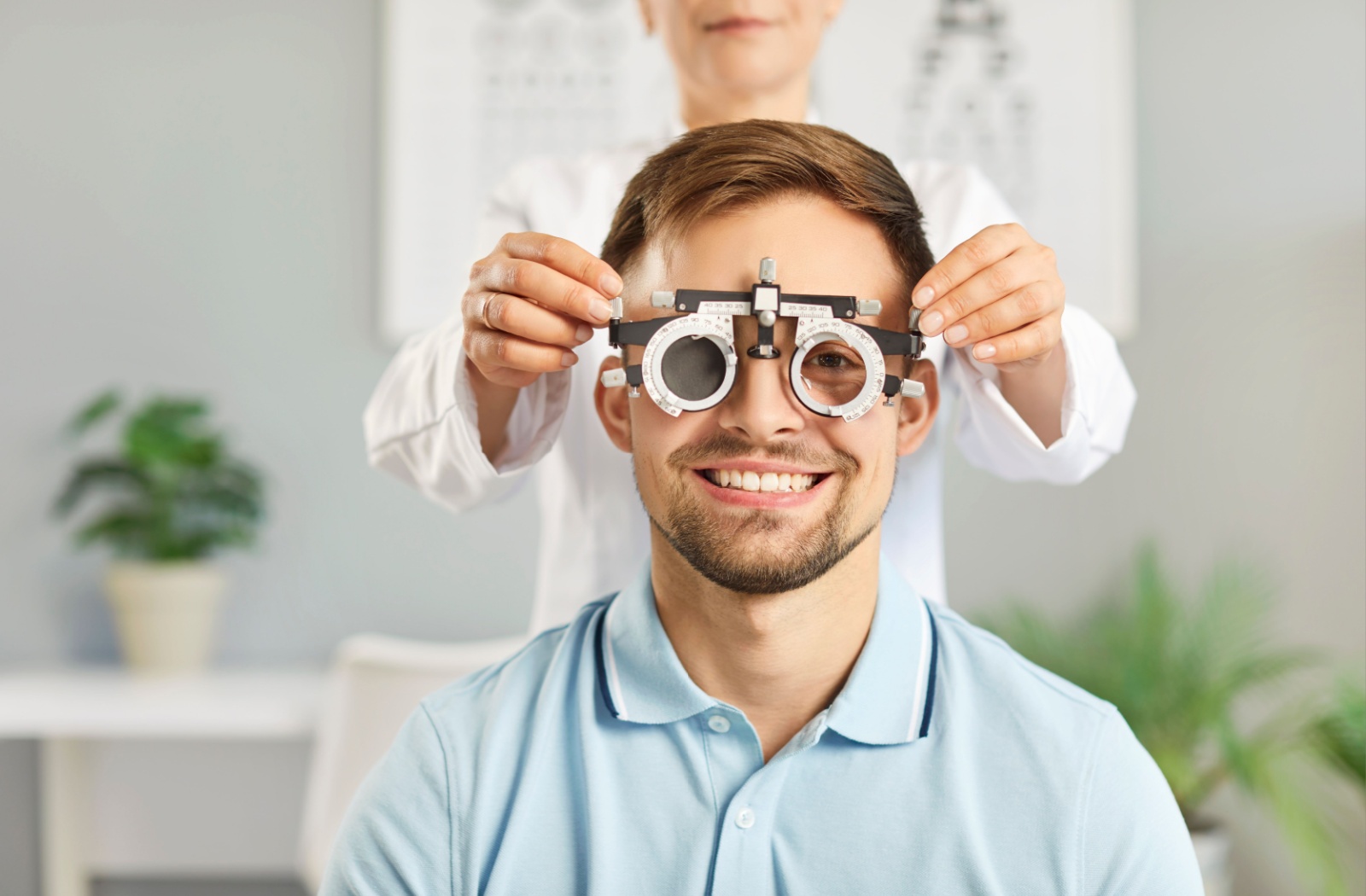
  3. Refraction – Using a phoropter (the instrument with lenses) to determine your exact prescription.
  4. Eye Muscle Function Test – Checking how well your eyes work together and follow moving objects.
  5. Pupil Response Test – Shining a light to check how your pupils react.
  6. Slit-Lamp Examination – A microscope that examines the front structures of your eye (cornea, iris, lens).
  7. Tonometry – Measuring the pressure inside your eye (important for glaucoma). This may involve a puff of air or a gentle probe.
  8. Dilated Fundus Examination – Eye drops widen your pupils so the doctor can examine the retina and optic nerve at the back of the eye. Your vision may be blurry and sensitive to light for a few hours afterward, so bring sunglasses and avoid driving if possible.

Frequently Asked Questions (FAQ)

Q: I don’t wear glasses and my vision seems fine. Do I still need an eye exam?

A: Yes. Many eye diseases have no early symptoms. A comprehensive exam is the only way to detect them before they cause irreversible damage. Adults with no risk factors should still be checked every 2 years.

Q: How long does a comprehensive eye exam take?

A: Usually 30 to 60 minutes, depending on whether dilation is needed and the complexity of your case. Allow extra time if you are selecting new frames or lenses.

Q: My child passed a vision screening at school. Is that enough?

A: No. School vision screenings are basic tests that can miss many problems, including focusing issues, eye coordination problems, and early eye disease. A comprehensive eye exam by an eye care professional is far more thorough.

Q: I am over 60 and have no eye problems. Do I really need to go every year?

A: Yes. The risk of age-related eye diseases increases sharply after 60, and early detection can save your sight. Annual exams are the best way to protect your independence and quality of life.

Q: Can I get an eye exam if I don’t have insurance?

A: Absolutely. We offer affordable self-pay rates and package deals. Your vision is too important to skip. Contact us to discuss options.


Conclusion

Your eyes are irreplaceable, and regular eye exams are the simplest way to protect them. By following the age-based guidelines and paying attention to your personal risk factors, you can catch problems early – often before you notice any symptoms – and keep your vision clear for life.

At [Your Eye Care Shop Name], we make eye exams convenient, thorough, and affordable. Our experienced optometrists use modern diagnostic equipment to check not just your vision but the overall health of your eyes.

Book your comprehensive eye exam today. It is one of the best investments you can make in your long-term health.

Leave a Reply

Your email address will not be published. Required fields are marked *

Latest Post

Consultation Service

Personalized eye care consultation tailored to your unique vision needs.