

By OPEX eye care Research Team
In today’s digital world, most of us spend hours every day staring at screens – computers, smartphones, tablets, and televisions. While these devices make life easier, they also bring a modern problem: Digital Eye Strain (DES), also known as Computer Vision Syndrome.
If your eyes feel tired, dry, or blurry after using a screen, you are not alone. Studies suggest that between 50% and 90% of people who work on computers experience some symptoms of digital eye strain. The good news is that with the right habits and the correct eyewear, you can reduce or even prevent this discomfort.
This guide explains what digital eye strain is, what causes it, the most common symptoms, and practical prevention methods – including how special lenses from our shop can help.
Digital Eye Strain is a group of eye and vision problems caused by prolonged use of digital screens. It is not one single condition, but a collection of symptoms that occur when your eyes work harder than normal to focus on digital displays.
Unlike reading a printed book, screens add extra challenges: glare, poor contrast, flickering pixels, and blue light. Your eye muscles must constantly adjust and refocus, which can lead to fatigue.
Understanding the causes is the first step to prevention. The main factors include:
Your eyes are not designed to focus on a close object for hours without rest. The ciliary muscles inside your eye stay contracted to keep the lens focused up close, causing fatigue over time.
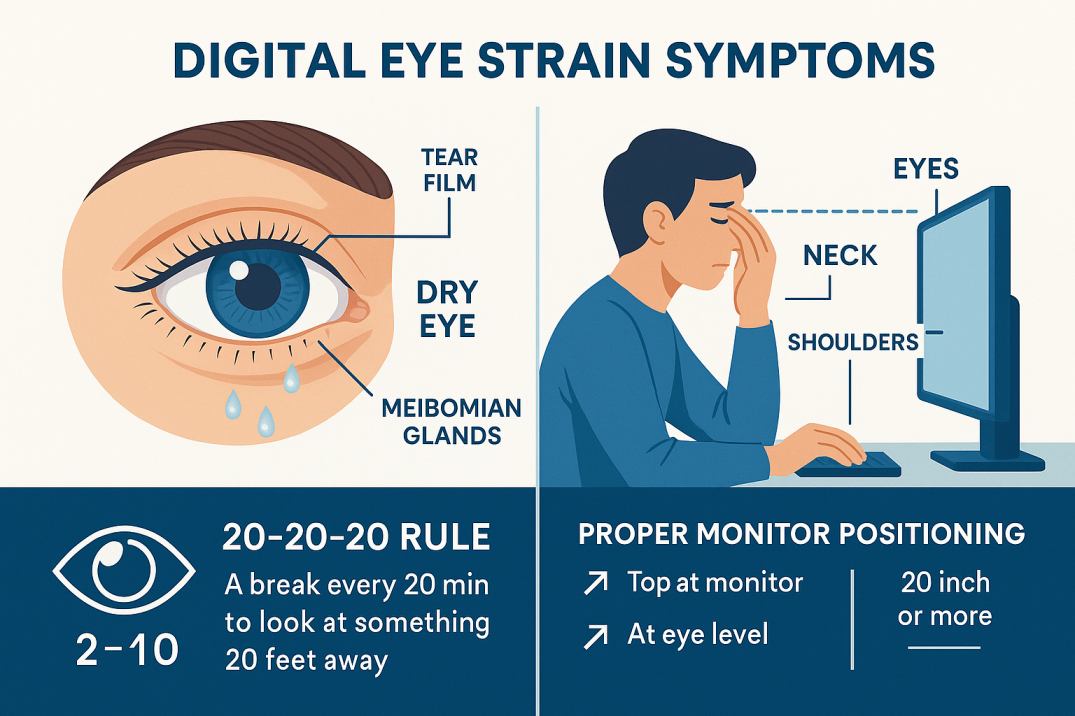
Normally, you blink about 15–20 times per minute. But when staring at a screen, that rate drops to 5–7 times per minute. Less blinking means your tear film evaporates faster, leading to dry, irritated eyes.
Sitting too close to the screen, or viewing it at an incorrect angle (e.g., looking up or down too much), forces your eyes and neck into unnatural positions. The ideal distance is about an arm’s length (50–70 cm) with the top of the screen at or slightly below eye level.
Bright lights from windows or overhead lamps reflecting off the screen make your eyes work harder to see clearly. Screen glare reduces contrast and contributes to squinting.
Even a small refractive error (nearsightedness, farsightedness, astigmatism, or presbyopia) can worsen digital eye strain. If you already wear glasses but your prescription is outdated, your eyes compensate by straining harder.
Digital screens emit high-energy blue light. While blue light from the sun is normal and even helps regulate sleep, excessive exposure from screens – especially in the evening – can cause visual discomfort and may disrupt your sleep cycle. Research on long-term retinal damage from screen blue light is still ongoing, but short-term visual fatigue is well documented.
Slouching or leaning toward the screen not only causes back and neck pain but also changes the angle at which your eyes view the screen, increasing strain.
The symptoms can vary from person to person, but the most common ones include:
If you experience these symptoms regularly, it is important not to ignore them. While digital eye strain is usually temporary and does not cause permanent eye damage, it can reduce your productivity and quality of life. In rare cases, persistent symptoms may indicate an underlying vision problem that needs professional correction.
The good news: you do not have to give up your screens. Small changes to your habits, workspace, and eyewear can make a huge difference.
This is the simplest and most effective method to relax your eye muscles:
Stand up, stretch, and walk around for a few minutes every hour. This improves blood circulation and gives both your eyes and body a rest.
Visit your eye care professional at least once a year. Tell them how much time you spend on digital devices. They can check for uncorrected refractive errors and recommend the best lens options for your lifestyle.
Sometimes habits alone are not enough. Specialised lenses can significantly reduce strain and improve comfort. At [Your Eye Care Shop Name], we offer several options:
These are prescription glasses designed specifically for the intermediate distance of a computer screen (about 50–70 cm). They reduce the focusing effort required and often have a wider intermediate zone than regular progressive lenses.
These lenses have a special coating that filters out a portion of high-energy blue light from screens. While more research is needed on long-term benefits, many users report less glare, better contrast, and reduced evening eye fatigue. They are especially helpful if you use screens late at night, as they may help protect your sleep cycle.
An anti-reflective coating eliminates reflections from the front and back surfaces of your lenses, allowing more light to pass through. This improves clarity, reduces glare from screens and lights, and makes your eyes look more natural on video calls.
If you move between indoors and outdoors, photochromic lenses darken in sunlight and become clear indoors. Some newer versions also filter blue light indoors, providing all-day comfort.
While not directly for digital eye strain, protecting your eyes from UV outdoors is essential for overall eye health. If you spend time outdoors between screen sessions, UV-blocking sunglasses reduce cumulative light stress.
Not sure which option is right for you? Visit our shop for a free digital eye strain assessment. Our optometrists can recommend a personalised solution based on your screen habits, prescription, and budget.
A: No, current evidence suggests digital eye strain does not cause permanent eye damage. However, the symptoms can be severe enough to reduce your quality of life. If left unmanaged, they may also worsen underlying uncorrected vision problems.
A: It depends on your needs. Blue light filtering lenses can reduce glare and improve visual comfort for some people, especially in the evening. They are not a proven cure for eye strain, but many users find them helpful. We recommend trying them and seeing if your symptoms improve.
A: Every 20 minutes during screen use, without exception. Set a timer or use a reminder app to build the habit. Even a short 20-second break looking away from the screen resets your focus.
A: Possibly. If you are over 40 and use progressive lenses, computer glasses with a wider intermediate zone can be much more comfortable. Even younger users with mild prescriptions may benefit from a dedicated pair with anti-reflective coating. We can test your specific working distance and prescribe accordingly.
A: Yes. Children are spending more time on screens than ever. Encourage the same rules: proper distance, frequent breaks, outdoor time, and regular eye exams. If your child complains of headaches or squints at the screen, bring them in for a check-up.
Digital eye strain is a real and common problem in the digital age, but it is also highly preventable. By understanding the causes, recognising the symptoms, and adopting simple habits – along with the right eyewear – you can keep your eyes comfortable and healthy.
At [Your Eye Care Shop Name], we are committed to helping you see clearly and comfortably in every situation. Whether you need computer glasses, blue light filters, or just a comprehensive eye exam, our team is ready to help.
Book your appointment today and give your eyes the care they deserve.



WhatsApp us